
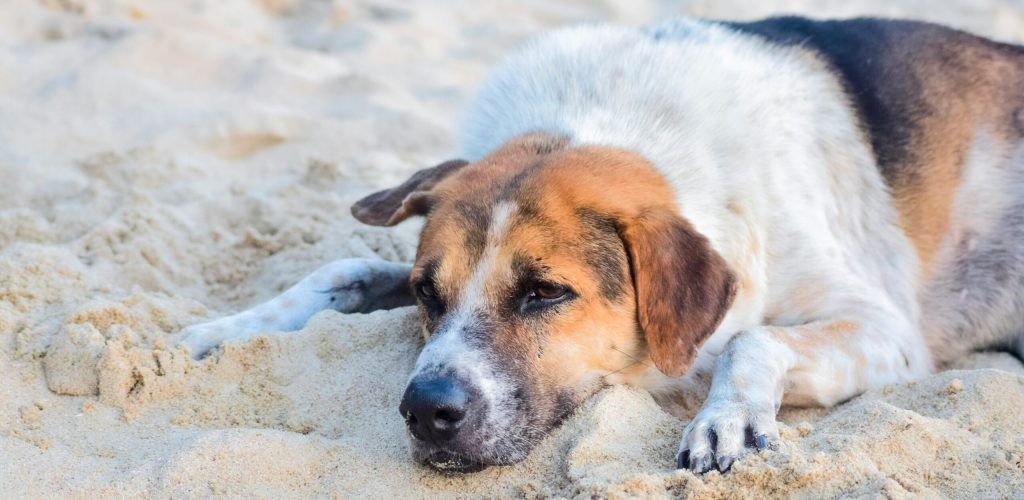
Mauritius continues to grapple with a significant stray dog issue, with the problem persisting despite efforts from authorities and animal welfare organizations. Commonly referred to as “Maurichiens,” these dogs roam the streets, beaches, and public spaces, raising concerns about animal welfare and public safety. While the Mauritius Society for Animal Welfare (MSAW) has implemented a “Free Mass Sterilization Campaign” in collaboration with the Ministry of Agro-Industry and Food Security since 2015, the situation remains critical. This article explores the current status of stray dogs in Mauritius, the latest statistics, sterilization initiatives, legislative challenges, animal abuse concerns, and potential solutions for responsible adoption.
The number of stray dogs in Mauritius
According to a new report released in January 2025, the estimated number of stray dogs in Mauritius has surged to 300,000 (in 2013, they were estimated to be 75,000), highlighting the urgency of the issue.
The MSAW defines a stray as any dog not under someone’s control, including those with collars who actually belong to owners who allow them to roam freely.
Sterilization campaigns for street dogs in Mauritius
The MSAW’s sterilization program remains a core strategy for controlling the stray dog population. The organization has adopted a Catch-Neuter-Release (CNR) approach, in which captured stray dogs are sterilized and then released back into their environment. This method, successfully used in countries like the Netherlands and India, aims to curb the stray dog population sustainably.
According to the director, the MSAW has carried out over 18,500 dog sterilizations, including cats, around the island (September 2024).
A “voucher” system, available online, allow dog owners to access free sterilization services through private veterinarians at the organization’s expense.
However, challenges persist, with a significant number of vouchers remaining unused and a larger portion of the stray dog population left unsterilized.
To enhance the impact of sterilization efforts, the latest government plan proposes establishing regional branches to treat sick, mistreated, and abandoned animals. Feeding stations will also be installed to provide food to stray dogs in a controlled manner, reducing the environmental impact of random feeding by the public.
Challenges in capturing and releasing stray dogs
One of the key debates surrounding the management of stray dogs revolves around their fate post-sterilization. Current protocols dictate that sterilized dogs are released back into their original locations unless they were captured in strategic or high-risk areas. However, some activists argue that releasing dogs back into the streets is not a viable long-term solution.
NGO leaders advocate for the creation of large sanctuaries to house stray and mistreated animals.
Additionally, the use of anesthetic darts for dog capture has been proposed in the new government’s law project as an alternative to traditional net capture methods. While this could improve efficiency, concerns have been raised about potential misuse, particularly in the controversial issue of monkey population control in Mauritius.
Dogs registration law
Effective management of stray dogs requires mandatory dog owner registration, which is now a legal requirement since October 2025.
With the enforcement of Section 31(1) of the Animal Welfare Act 2013, all dog owners are now required to register their four-legged companions with the Mauritius Society for Animal Welfare (MSAW).
If a dog is not registered, owners will first receive a warning along with a deadline to complete the registration. If this deadline is not met, a Rs 100,000 fine will be imposed.
This measure is essential to solve the problem of stray dogs. Without it, distinguishing between stray and owned dogs would have remained impossible, making sterilization efforts inefficient. Furthermore, identifying owners is crucial for addressing abuse or abandonment.
Here’s how it works: a small microchip is inserted under the dog’s skin. It does not contain GPS and cannot be used to track the animal’s location, but it carries a unique identification number linked to the owner’s contact details.
The registration fee is Rs 350 per dog. Owners must present their ID card or passport, proof of address, and bring their dog to one of the authorised centres. At the end of the process, an official certificate is issued — proof that the animal has a recognised identity and that its owner is taking full responsibility.
The SSR Veterinary Clinic in Rose Hill and the Plaine Magnien Animal Station are providing this service. They are open daily, including weekends, from 8 a.m. to 12 p.m. and 1 p.m. to 3:30 p.m.
Police stations across the island will also temporarily host this registration service from 13 October until 23 December. You can find the list of police stations, with the dates and schedule of those campaigns on L’Express.
Registration will also be available during sterilisation campaigns conducted around Mauritius.
Breeding and importation of pure breed
The latest government’s law project includes strict measures to regulate the breeding and importation of purebred dogs. Wild breeding farms, where females are exploited until exhaustion before being abandoned, are being criticized. The trade of purebred dogs should be subject to strict rules, including the implantation of microchips and the provision of a health booklet validated by the MSAW or an authorized veterinarian. For importation, the document proposes a ban or the introduction of discouraging taxes.
Animal abuse
Animal cruelty remains a major concern in Mauritius, with MSAW handling approximately 20 reported cases of abuse each month. Common cases include dogs being chained in poor conditions, left on rooftops, or subjected to extreme violence such as hanging, stabbing, or intentional harm by vehicles.
The legal framework for animal welfare has been strengthened, with fines for animal abuse now reaching up to Rs 500,000 and prison sentences ranging from six months to 10 years. MSAW officers have also been granted new legal powers, enabling them to inspect properties and issue “Notices to Comply” to negligent owners. Despite these legal improvements, enforcement remains inconsistent. Activists have called for the establishment of a dedicated National Animal Police Unit to oversee the proper application of animal welfare laws.
New policies discussed on pet food
Additionally, tax reductions on locally produced pet food and common veterinary medicines are being considered, alongside a new policy requiring supermarkets and businesses to donate unsold food to shelters and NGOs instead of discarding it.
Adopting street dogs in Mauritius
Last year, we had the joy of adopting Snowie, a 2 months old street puppy found on Tamarin beach, and it has truly been a rewarding experience. She has brought so much happiness and love into our lives.
Adopting a stray dog is one of the most effective ways to combat the overpopulation crisis.
To promote adoption, discussions are ongoing regarding a Rs 10,000 tax deduction for individuals who adopt a dog. Several shelters and organizations actively facilitate the adoption of spayed, vaccinated, and microchipped stray dogs, including:
You may also fall in love with a dog on the street or on the beach. That is sometimes the case of tourists visiting Mauritius who make the news for having developed a fondness for street dogs and raised funds to bring them home. Organizations like Louspoir assist in repatriating street dogs to France, where they find new adoptive families.
Aspiring adopters are advised to ensure that a street dog is genuinely stray before taking it in. A veterinary check-up is essential, considering the potential challenges such as unknown medical history and diseases common among street dogs. Indie dogs are hardy and are more resistant to diseases than pedigrees; but they still need regular medical attention.
When considering adopting a puppy, it’s important to keep in mind that they should ideally not be separated from their mother until they reach 8 to 12 weeks of age. Additionally, if a dog exhibits aggressive behavior or is part of an established pack, it is likely accustomed to street life and may not thrive as a domesticated house pet.
Adopting a street dog requires patience and careful consideration. It’s crucial to assess the dog’s health, behavior, and socialization. Potential adopters are encouraged to interact regularly, gaining the trust of the dog before attempting to bring them home.








6 Responses
Hello, do you know something about the dog situation now in 2025? I love dogs but i want to travel around the island in a bike and dogs can be a seriuos issue. Thanks.
Hi Luis, I’ll do an update on that article soon. There are still many stray dogs on the island, so I can understand your concern…
Is it possible for the hotels to leave fresh water and food for the dogs?
Not in Paradise Island. The hotels do not want cats and dogs on and in the vicinity of their premises.
Dog and cat poisoning are allegedly fairly common in the vicinity of these places. It might be a good idea for some data collection if possible at all.. I understand that most of these poor creatures would just die out there and nobody bothers.. occasionally, a Good Samaritan might take them to a vet.
Is it common for owners to allow their dogs to roam freely with no collar or tag? Recently returned to UK following vacation and met a wonderful dog on Grand Baie beach and someone told me it was there dog but hotel said no way as it is there all the time. Seemed to friendly though and slightly trained to be a stray. Was wondering how to find out more but now back in UK
Hi Jeff! It’s not impossible that someone is taking care of the dog, though usually they would at least have a collar. This is a big part of the issue in Mauritius, and the reason why it’s a good thing that it’s now going to be compulsory for owners to register their dogs. Next time you’ll come, you would be able to identify if it really belongs to someone or not.