
Walk down any supermarket aisle in Mauritius and most of what you see arrived by container ship — noodles from India, biscuits from the UK, snacks from South Africa, dairy and pantry staples from France — alongside a smaller, growing shelf of products actually made right here. That’s exactly what makes Mauritius such a tricky place to shop carefully: every one of those source countries has its own rules about what’s allowed in food, and because we import from everywhere, all of those different standards end up on the same shelf, side by side, with nothing telling you which is which.
An additive restricted or banned in one country can be perfectly legal in another market a product was made for. And it’s rarely obvious — it’s usually a few characters of fine print.
“Antioxidant.” Sounds healthy, doesn’t it?
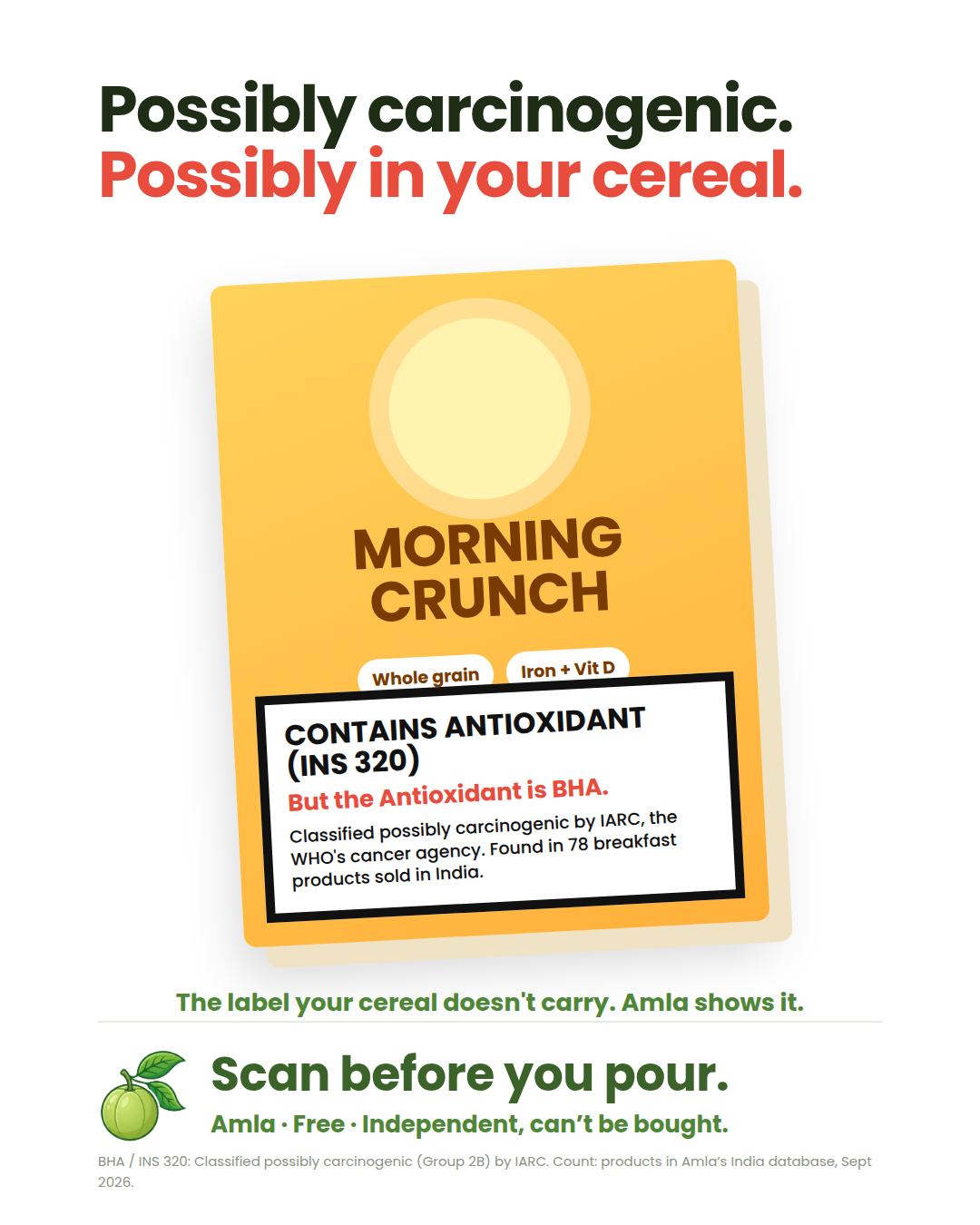
Take a box of cereal that lists “Antioxidant (INS 320)” in the ingredients. Sounds like a good thing — until you know that INS 320 is BHA, classified “possibly carcinogenic” by the WHO’s own cancer research agency (IARC). Scan Amla’s own India database and it turns up in 78 breakfast products — and a good number of those same regional brands and product lines are exactly what lands on Mauritian shelves too.
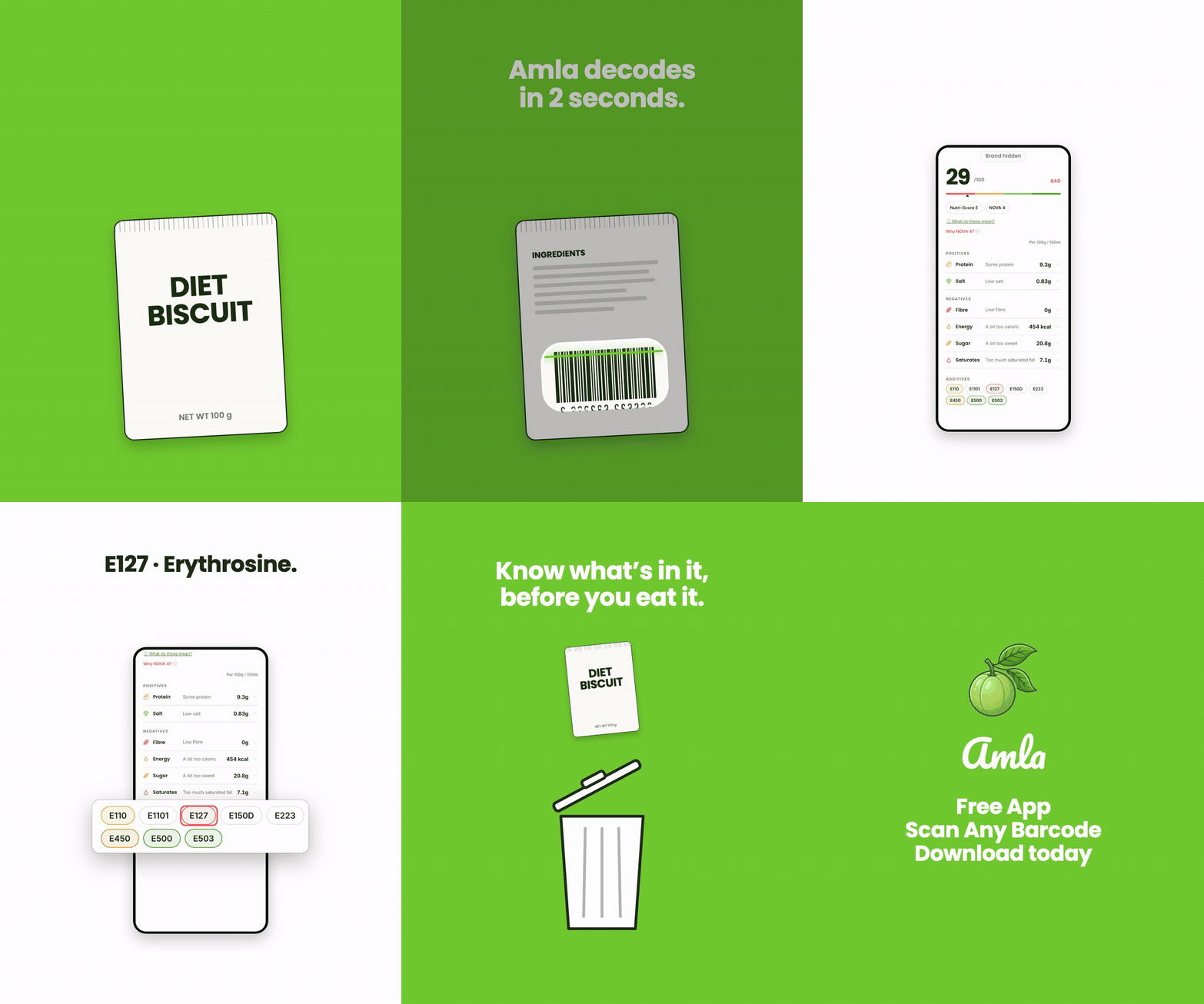
Nobody scanning the front of that box would know. The back of the pack doesn’t make it easy either. That’s the gap a free app called Amla was built to close: point your camera at any barcode and get a plain score out of 100, with a clear breakdown of why, in seconds.
Why Nutri-Score alone isn’t enough
Nutri-Score — the A-to-E grade now appearing on more packaging — is genuinely useful, but it was built to answer one question: how nutritionally balanced is this food? It wasn’t built to answer a second, increasingly important one: how heavily processed is it, and does that matter on its own?
It does. A growing body of nutrition research has linked diets high in ultra-processed food — the reconstituted snacks, instant noodles, and packaged mixes built in a factory from isolated ingredients and additives rather than recognisable food — to higher rates of obesity, type 2 diabetes, and heart disease. A product can carry a perfectly respectable Nutri-Score and still be exactly the kind of ultra-processed food this research keeps flagging. Neither tool alone tells the whole story.
How Amla actually scores a product
Amla blends Nutri-Score with NOVA, the processing classification, then adds checks most labels never surface on their own: a watch-list for additives research has flagged as worth a closer look, a cap for anything containing an ingredient the WHO classifies as carcinogenic (like the BHA example above), and a separate check for trans fats — still legally present in some products sold here. It’s independent: no food or cosmetics company pays for a score, and it’s built on a database of over a million products and growing fast — usable wherever you are, not just in Mauritius.
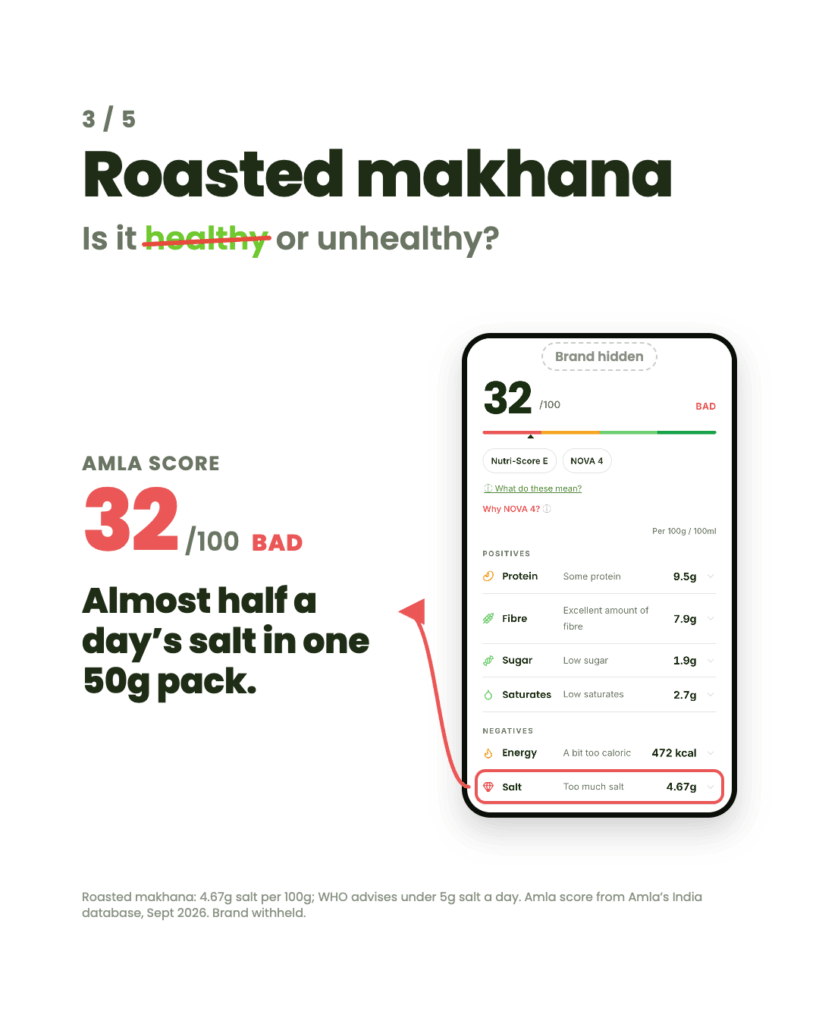
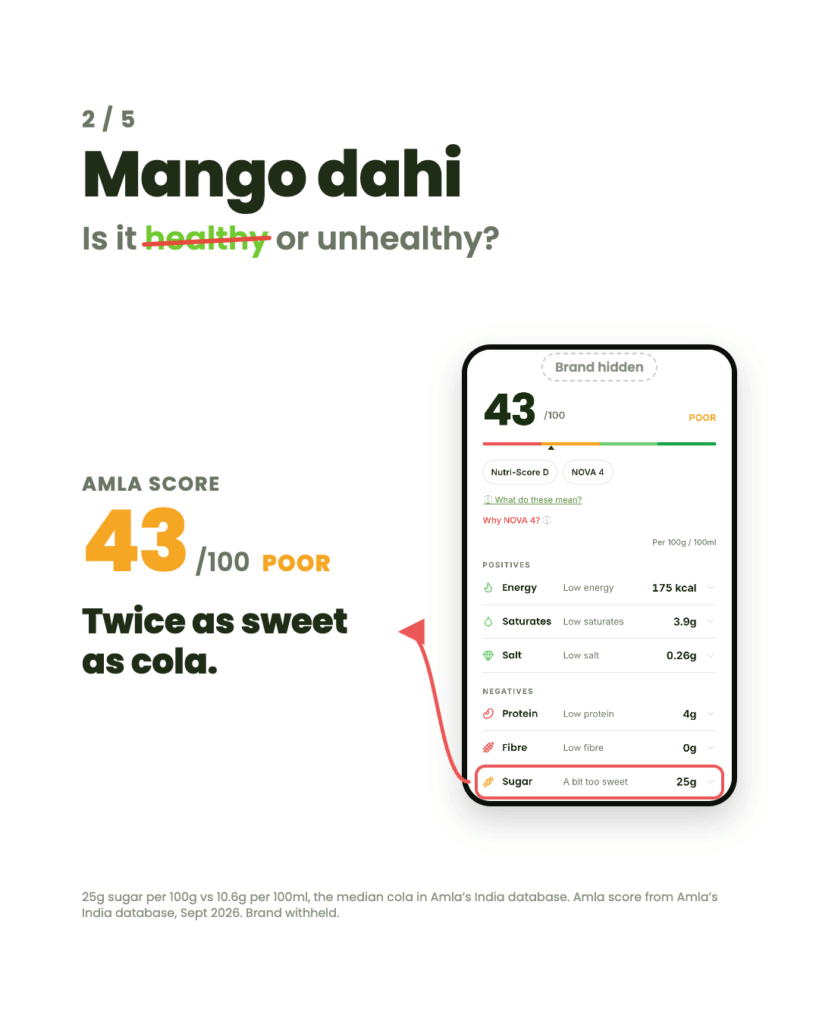
A couple of real scans make the point better than any explanation:
It’s free
Amla is free to download and free to use — no subscription needed to scan a product and see its score. Available now for Android and iPhone:

The bigger point
As Amla’s founder puts it: the better thing than going to a nice hospital is to avoid going to hospital at all. That’s really what this is about — not fear for its own sake, just giving Mauritian shoppers the same thirty seconds of information before they buy that they’d want before they eat.
Next time you’re in the aisle, scan before you decide.





Commentaires récents